
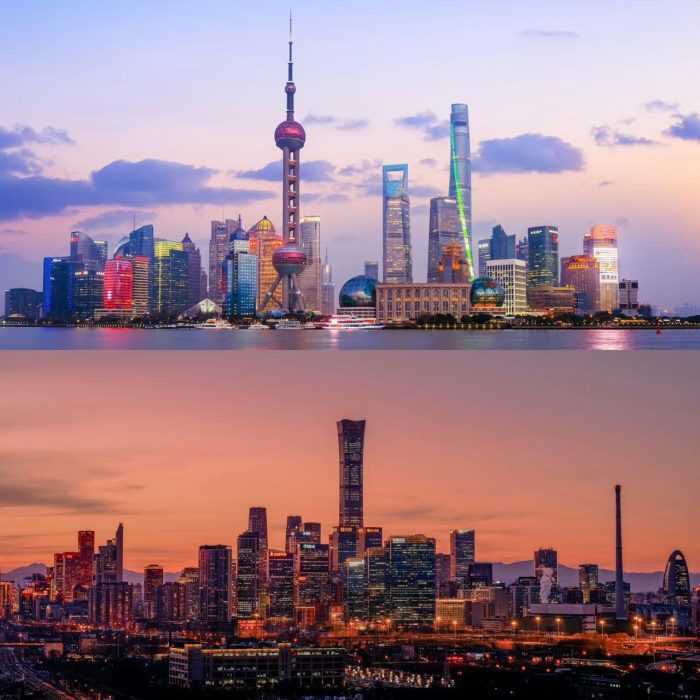
1. Wheat-heavy vs water-rich cuisines
Beijing sits firmly in northern wheat country, and the food reflects that. Dishes like yang xiezi (羊蝎子), a braised lamb spine stew, and luzhu (卤煮), a deeply savory pork offal stew, are built to be warming, filling, and unapologetically bold. Everyday staples follow the same logic, from thick-skinned baozi (包子) stuffed with pork and fennel to wheat noodles designed to satisfy hunger first.
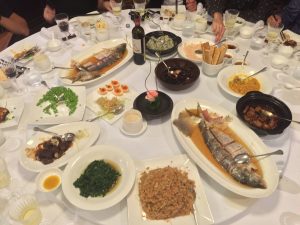
Shanghai cuisine, shaped by rivers, canals, and proximity to the sea, leans far more into fish, shrimp, and freshwater seafood, alongside rice. Think hexia (河虾), tiny river shrimp sautéed lightly and dipped in vinegar, or whole steamed fish (蒸鲥鱼) topped with slivers of Jinhua ham and finished with aged Shaoxing wine. These dishes can be rich, but they rarely feel heavy.
2. Same noodles, very different intentions
Both cities eat wheat noodles, but they use them differently.
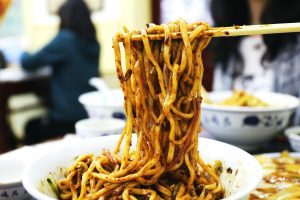
In Beijing, zhajiangmian (炸酱面) is a full meal: thick wheat noodles topped with a heavy soybean paste sauce and plenty of heft. It’s savory, filling, and designed to keep you going.
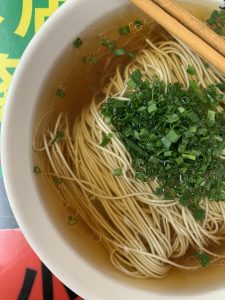
In Shanghai, yangchun mian (阳春面) is almost the opposite. Sometimes called “plain noodles,” it’s a test of a good chef and good ingredients, wheat noodles floating in a clear pork-and-chicken broth with soy sauce, scallions, and just enough lard to give it body. It’s restrained, delicate, and unforgiving of shortcuts.
3. The jianbing test
Both cities have jianbing guozi (煎饼果子), but they might as well be different foods.
In Beijing, jianbing is thick, hearty, and heavy enough to be a meal on its own. The pancake is so substantial it’s usually flipped to fully cook the egg through, and it often includes a touch of furu (fermented tofu) for extra depth and funk.
Shanghai jianbing is lighter, thinner, and crispier, more of a snack than a full meal. The pancake is so delicate the egg cooks through just from the heat of the griddle on one side.
Same name, completely different crepe.
4. Rich doesn’t always mean heavy
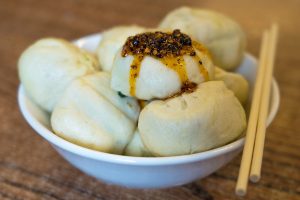
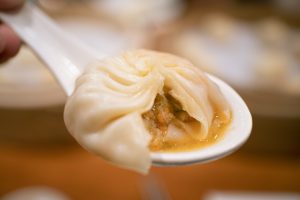
Shanghai food can be luxurious without feeling dense. Hairy crab xiaolongbao (蟹粉鲜肉小笼包), for example, is filled with pork and crab roe suspended in collagen-rich stock that sets at room temperature, yet the wrapper is paper-thin and the finished dumpling tastes surprisingly light. You can eat a long (steamer basket) of them in one sitting, easy.
(And yes, before you object and point to Shanghai’s famous hongshao rou (红烧肉), we’ll admit that dish of fatty pork belly is undeniably heavy, but it’s the exception rather than the rule.)
5. Different ideas of fullness
Beijing meals aim to make sure you’re warm and full, especially in winter. Portions are generous, flavors are bold, and dishes are meant to satisfy hunger first.
Shanghai meals often focus on balance and refinement, with seafood, vegetables, and lighter proteins playing a central role.
Neither approach is better, just different. Beijing food makes sure you don’t leave hungry. Shanghai food makes sure you notice every ingredient.
Curious to taste the difference for yourself? Come eat with us on China’s best food tours. UnTour Food Tours runs small-group and private tours in Beijing, Shanghai, and Chengdu, seven days a week, showing you how locals really eat, and why Chinese food is one of the world’s great cuisines.
Leave a Reply